Does Snowmass Village Have a Radon Problem?
Yes — the same one the rest of the upper valley has. Snowmass Village (population 3,096, ZIP 81615) is in Pitkin County, which the EPA designates Zone 1, its highest-risk category, and county environmental health staff report that roughly 40–50% of locally tested homes come back above the 4.0 pCi/L action level. The driver is geology: uranium-bearing rock and soil run throughout the Colorado Rockies, and fractured rock gives soil gas easy pathways up into foundations. Elevation and season make it worse — Snowmass homes are sealed tight against a heating season that runs seven-plus months, and the stack effect in a warm, closed house actively pulls soil gas indoors all winter. The map says test; the local data says about half the time, the test finds something.
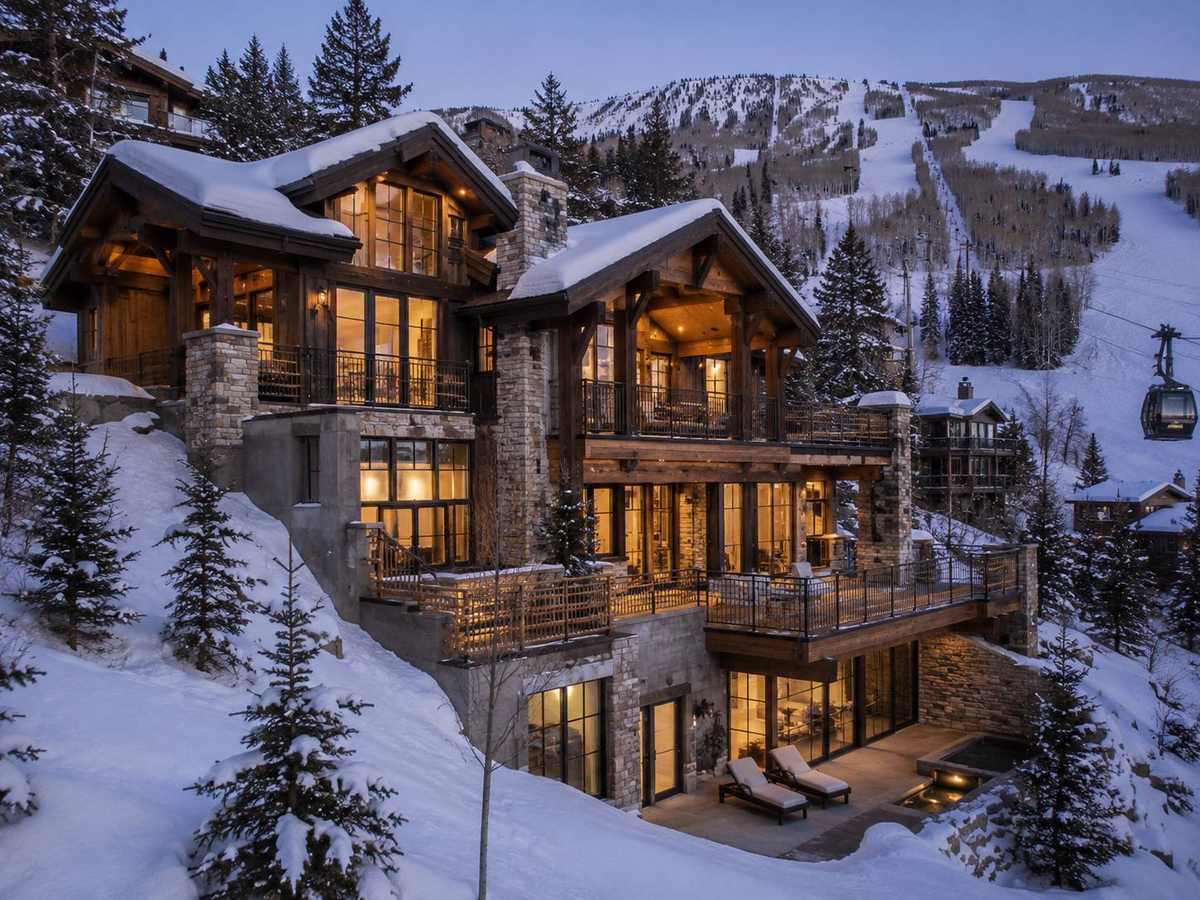
Ski-In/Ski-Out Homes Are Built Into the Problem
A lot of Snowmass Village housing is literally built into the hillside — that's what ski-in/ski-out means structurally. Slopeside construction produces walkout lower levels, multiple foundation footprints, and living space in direct contact with a lot of mountain. Those mixed slab-plus-basement-plus-crawlspace layouts are exactly the homes where a single-pipe, one-suction-point system underperforms, and where we design multi-point systems for complex foundations instead. Modern, tightly air-sealed mountain construction adds a twist: energy-efficient homes hold heat beautifully, and hold radon just as well.
The Second-Home Trap: Vacant Homes Tested Wrong
Much of Snowmass Village is seasonally occupied, and vacant homes generate the most misleading radon results in the valley. Two facts to hold onto. First, an empty house does not accumulate radon indefinitely — indoor levels reach steady state about 12 hours after the home is closed up. Second, the classic error runs the other way: a caretaker airs the place out before a visit or a test, and the "low" result that follows is meaningless. Proper protocol is closed-house conditions — windows and doors shut — for 12 hours before and during the test. If you own here but live elsewhere, or you manage properties that sit empty between guests, our second-home and property-manager guide covers the right protocol, continuous remote monitors, and the disclosure duties Colorado landlords owe tenants.
Test Free First — Then Call If the Number's High
Pitkin County hands out free test kits every January at 530 E Main St, Suite 205, in Aspen, and CDPHE offers every Colorado household one free kit a year. Start there if you have no deadline. Where a licensed measurement matters: real-estate transactions, conflicting results, or any decision you need to defend — that's a continuous-monitor test performed under HB21-1195 licensing. And if the number is high, mitigation is a solved problem: most Colorado systems run roughly $1,200–$3,000, though complex mountain homes can run more — details in our cost guide.
Old Snowmass and Well Water
Down-valley of the village, Old Snowmass (ZIP 81654) is ranch and acreage country where many homes draw from private wells — and radon travels in water, too. A peer-reviewed study of a Colorado mountain community found all 27 private wells tested exceeded the EPA's proposed radon limit for water. The rule of thumb: 10,000 pCi/L in water adds about 1 pCi/L to indoor air. If your Snowmass-area home is on a well, test both air and water — here's how radon in well water works and what fixing it costs.